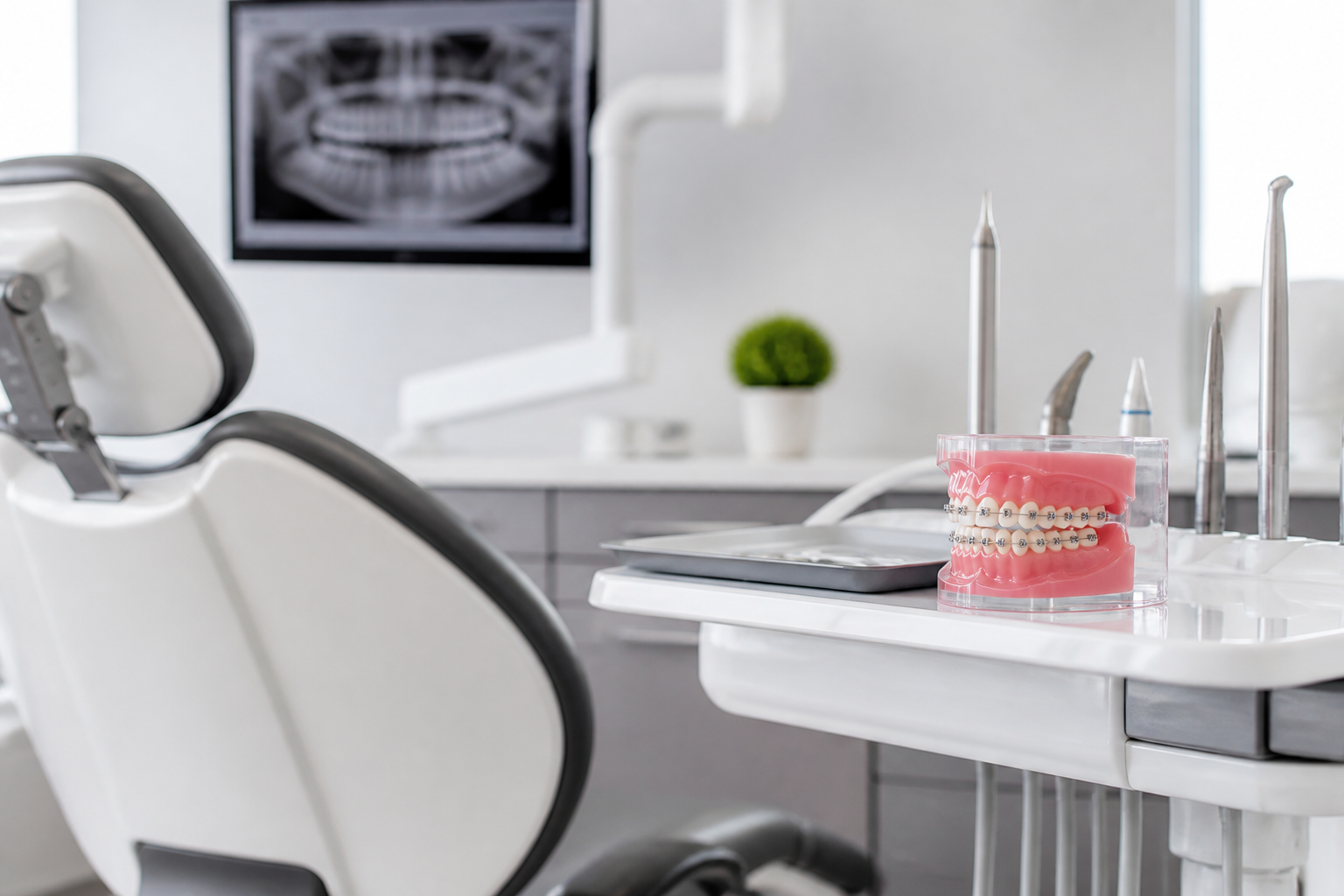
What “In-Office Orthodontic Supervision” Actually Means, and Why It Matters More Than Most Patients Realize
If you have spent any time researching orthodontic options lately, you have probably come across warnings about mail-order aligner companies. Maybe you read a news story, heard something from a friend, or noticed the growing pile of regulatory complaints. And now you are here, trying to figure out what legitimate, supervised orthodontic treatment actually looks like, and whether the price difference is worth it.
That is a genuinely good question, and it deserves a genuinely specific answer.
At SmileHaus Orthodontics on Fair Oaks Avenue, “in-office supervision” is not a marketing phrase. It refers to a set of concrete clinical steps that happen at every stage of your treatment, performed by the same orthodontist, using diagnostic tools that simply cannot be replicated by a phone camera and a plastic mold kit mailed to your door. This article walks through exactly what those steps are, why each one exists, and what can go wrong when they are skipped.
Why Mail-Order Aligners Became a Problem Worth Talking About
Mail-order aligner companies built their pitch on two ideas: convenience and cost. Skip the office visits, take your own impressions at home, and pay a fraction of what you would pay an orthodontist. For some consumers, that sounded like a sensible shortcut.
The problems that followed were well-documented. The American Association of Orthodontists issued consumer alerts. State dental boards took disciplinary action against some providers. Patients reported tooth movement that worsened their bite, gum recession, and in some cases, tooth loss that required surgery to address. Many of those patients had underlying conditions, including bone loss, bite problems, or root irregularities, that a clinical exam would have identified before a single aligner was fabricated.
The core issue was not the aligner material itself. It was the absence of diagnosis. Moving teeth without understanding the full picture of someone’s oral health is not a shortcut. It is a risk transfer, from the company to the patient.
What an In-Office Exam Actually Includes
When a new patient comes to SmileHaus Orthodontics at 1414 Fair Oaks Avenue, Unit 7, the first appointment is not a sales pitch. It is a diagnostic session, and it covers territory that no at-home kit can assess.
The exam begins with a clinical evaluation of the teeth, gums, and bite. The orthodontist looks for signs of gum disease, bone loss, tooth decay, and joint issues — factors that are relevant to how teeth can safely move and that may need to be addressed before orthodontic treatment begins. Identifying these factors first allows the orthodontist to develop a treatment plan that accounts for them, so tooth movement proceeds on a stable foundation. If you are curious about what to expect at your first visit, the process is comfortable and thorough from the start.
From there, SmileHaus uses radiation-free 3D digital scanning. A small wand moves gently around the mouth to create a precise three-dimensional model of the teeth and bite. There are no goopy impression materials, no guesswork, and no waiting for molds to set and ship. The scan takes minutes and produces a far more accurate record than any at-home impression kit.
When clinical findings indicate a need, low-dose digital imaging provides a view of root positions, bone structure, and any anatomical factors that affect how teeth can safely move. This is information that is invisible to the naked eye and irrelevant to a mail-order company that never sees the patient.
The Role of the Orthodontist in Treatment Planning
Digital tools do not plan treatment. Orthodontists do.
After gathering diagnostic records, the orthodontist at SmileHaus reviews everything together: the clinical exam findings, the 3D scan, any imaging, and the patient’s own goals and concerns. Treatment planning involves deciding not just where the teeth need to go, but how to get them there safely, how quickly, and in what sequence.
For most patients, SmileHaus leads with Pitts21 PRO braces — a self-ligating bracket technology designed for comfortable, efficient tooth movement with fewer adjustment visits than conventional braces. That efficiency does not come from removing oversight. It comes from a smarter bracket design, still guided by an orthodontist who is tracking every appointment.
For patients who are a good fit for clear aligners, SmileHaus also offers Spark™ Clear Aligners as a high-precision removable option for those cases — planned and monitored by the same doctor throughout treatment. The difference between these aligners and a mail-order product is not cosmetic. It is the clinical foundation underneath them: a diagnosis, a treatment plan, and a professional who is accountable for the outcome at every step.
What “Same Doctor at Every Visit” Actually Means
One of the specific commitments at SmileHaus is continuity of care. The same orthodontist who evaluates you at your first visit is the same one who monitors your progress at every subsequent appointment.
This matters more than it might seem. Orthodontic treatment unfolds over months. Teeth respond to forces in ways that are not always perfectly predictable. Sometimes a tooth moves faster than expected. Sometimes a patient’s gum tissue responds to new pressure in a way that needs attention. Sometimes a scheduled step needs to be modified based on what the orthodontist sees that day.
None of that can happen remotely, from a photo submitted through an app. A physical check-in with a qualified provider is the mechanism by which small problems are caught before they become large ones. It is also how the patient gets to ask questions, raise concerns, and feel genuinely informed about their own treatment.
For parents researching children’s orthodontics in particular, this continuity is worth paying attention to. A child’s mouth is actively developing. The decisions made during early orthodontic treatment can affect jaw development and future dental health in ways that extend well beyond the alignment of the teeth visible today.
The Specific Checkpoints That Catch Problems Early
Here is a concrete picture of what supervised orthodontic treatment includes at each stage, and what it is designed to catch.
Before treatment begins: The diagnostic phase assesses whether any conditions — such as periodontal disease, inadequate bone support, unresolved decay, or joint issues — need to be addressed before tooth movement begins. It also establishes baseline records that make it possible to measure progress and identify unexpected changes over time.
During active treatment: Regular in-office visits allow the orthodontist to confirm that teeth are moving as planned, assess soft tissue health, check for any root resorption or other changes visible on imaging when warranted, and adjust the treatment sequence if needed. Attachments on aligners can be repositioned. Wire mechanics on braces can be modified. These are clinical decisions that require trained hands and eyes in the room.
As treatment concludes: The finishing phase involves detailed bite assessment and the transition to retainers. Retention is not an afterthought. It is the phase that protects the outcome of everything that came before it. A provider who oversees this phase ensures the retainer fits correctly, the bite is stable, and the patient understands how to maintain results long-term.
Each of these checkpoints is a place where supervised care finds something, corrects something, or confirms that treatment is on track. Mail-order models eliminate all of them.
Is the Cost Difference Actually What It Appears to Be?
The sticker price comparison between mail-order aligners and in-office orthodontic treatment can look dramatic. But the full cost comparison requires accounting for what happens when things go wrong.
Correcting complications from unsupervised tooth movement — whether that may involve bone grafting, periodontal treatment, restorative work, or retreatment with an orthodontist — can cost significantly more than professionally supervised treatment would have in the first place. Patients who have gone through that experience consistently report that the perceived savings disappeared entirely.
SmileHaus Orthodontics offers financing options and insurance coordination to make professionally supervised treatment accessible. The goal is to make the right choice financially realistic, not just clinically obvious.
If you have questions that are not covered here, the orthodontic FAQ page covers common concerns about cost, timing, and what different treatment options involve.
Supervised Care Is Not a Premium, It Is the Standard
The framing of mail-order aligners as a “more affordable alternative” depends on treating clinical oversight as an optional upgrade. It is not. Diagnosis, treatment planning, monitoring, and professional accountability are what orthodontic treatment is. What mail-order companies sell is tooth movement without those things. Those are not the same product at different price points.
At SmileHaus Orthodontics at 1414 Fair Oaks Avenue, Unit 7, every patient receives the same starting point: a thorough clinical evaluation, accurate 3D records, a plan developed by a qualified orthodontist, and consistent professional monitoring from start to finish. That structure is not a differentiator. It is the definition of responsible orthodontic care.
If you are weighing your options and want a clear, no-pressure conversation about what treatment would actually involve for you or your child, the team at SmileHaus Orthodontics is ready to help.
Schedule your free consultation at SmileHaus Orthodontics and find out what a properly supervised treatment plan looks like from the very first appointment.
SmileHaus Orthodontics is located at 1414 Fair Oaks Avenue, Unit 7. New patients are welcome.