Crowding, Spacing, and Bite Problems in Adults: Why Your Teeth Shift, and What to Do About It
You noticed it gradually. A tooth that used to sit straight now crowds its neighbor. A gap that wasn’t there before. Your bite feels slightly off, or your jaw aches in a way it didn’t five years ago. If any of this sounds familiar, you are not imagining things. Teeth move throughout your entire life, and adult orthodontic treatment exists precisely because the process that repositions teeth during adolescence does not simply stop once you reach your twenties. At SmileHaus Orthodontics, adults make up a significant portion of the patients who walk through the door at 1414 Fair Oaks Avenue, Unit 7, many of them surprised to learn that what they are experiencing has a clear clinical explanation and a clear clinical path forward.
This article breaks down why teeth shift in adulthood, what the most common bite and alignment problems actually mean structurally, and how a proper orthodontic evaluation helps you understand your options without any pressure to decide anything on the spot.
Why Teeth Keep Moving After Your Teenage Years
Most people assume that once braces come off, their teeth are locked in place. The reality is more dynamic. Teeth are suspended in the jawbone by a network of periodontal ligaments, and bone itself is a living tissue that continuously remodels in response to the forces placed on it. That process does not pause at 18.
Several factors drive tooth movement in adults.
Bone remodeling. Throughout adulthood, bone density and structure shift gradually in response to chewing forces, hormonal changes, and aging. Teeth follow the path of least resistance within that shifting environment.
Gum and periodontal changes. Even mild gum inflammation, the kind that may not cause noticeable symptoms, can alter the support structure around teeth. When that support changes, teeth have more room to drift. This is one reason your dentist may flag bite or alignment concerns during a routine cleaning before you notice anything yourself.
Wisdom teeth. Whether wisdom teeth contribute to crowding is a question that continues to be examined in the research literature. What is well established is that wisdom teeth may exert pressure on neighboring molars in some patients, and that mesial drift (the natural tendency of teeth to migrate forward over time) continues regardless of whether wisdom teeth are present.
Retainer wear. If you had braces in your teens and stopped wearing your retainer, some degree of relapse is almost inevitable. The teeth were moved to a new position, but the surrounding bone and ligaments retain a memory of where those teeth used to sit. Without ongoing retention, they drift back.
Understanding the cause of your specific shifting is exactly why an evaluation matters. Teeth shifting in adults is not a single problem with a single solution. It is a pattern with a source, and treatment planning starts with identifying that source accurately.
What Crowding Actually Means Structurally
Crowding happens when there is not enough arch space for all the teeth to sit in alignment. Teeth rotate, overlap, or shift inward as they compete for room. In adults, crowding is most commonly either a relapse from prior treatment or a gradual worsening of mild crowding that was never treated in the first place.
Structurally, crowding affects more than appearance. Overlapping teeth are harder to clean, which increases the risk of decay and gum disease. Crowded teeth can also contribute to uneven bite forces, placing excess stress on specific teeth over time.
For cases that call for precise control of tooth position — particularly those involving bite correction or more significant crowding — braces are typically the first-line clinical recommendation, and that determination is made from diagnostic records rather than general preference. For adult patients whose crowding is mild to moderate and who prefer a removable option, Spark™ Clear Aligners are a strong adjunctive path for patients whose anatomy and treatment goals align with what clear aligners do well.
What matters most at the diagnostic stage is determining whether crowding is purely a spacing issue or whether the underlying arch form and bite relationship need to be addressed at the same time.
What Spacing Problems Indicate
Spacing is the opposite problem: gaps between teeth that are either congenital (the teeth were always spaced that way) or acquired (space has opened up over time). In adults, acquired spacing often signals something worth investigating further.
A gap that opens between previously adjacent teeth can indicate bone loss around a tooth, a shift in the neighboring teeth, or a change in how the upper and lower arches meet. Spacing problems around missing teeth, where the surrounding teeth drift into the gap, are particularly common in adults who have had extractions and have not yet replaced the missing tooth with an implant or bridge.
From an orthodontic standpoint, closing spaces often involves more than simply moving teeth together. The bite relationship has to support the final position. If spaces are closed without accounting for the bite, the teeth may look better temporarily but the underlying forces will work against that result over time.
Spacing concerns are a common reason adults seek an adult orthodontics evaluation at SmileHaus Orthodontics. The diagnostic process maps out not just where the spaces are, but what created them, so the treatment plan addresses the cause rather than the surface.
Overbite, Underbite, Crossbite: What These Terms Mean for Adults
Bite problems (the technical term is malocclusion) are often described in ways that sound more alarming than they need to, or in ways that understate what is actually happening. Here is a straightforward breakdown of the most common presentations in adult patients.
Overbite. A deep overbite means the upper front teeth overlap the lower front teeth vertically by more than a normal range. Mild overbite is normal. A significant deep bite can cause the lower front teeth to bite into the roof of the mouth, accelerate wear on the front teeth, and contribute to jaw discomfort or TMJ-related symptoms.
Overjet. Often confused with overbite, overjet refers to the horizontal distance between the upper and lower front teeth. Significant overjet puts the upper teeth at higher risk of trauma and can affect how the jaws close.
Crossbite. A crossbite occurs when one or more upper teeth sit inside the lower teeth rather than outside. In adults, a posterior crossbite often means one side of the jaw has to shift slightly to accommodate the bite, which can create asymmetric muscle use and jaw discomfort over time.
Open bite. An open bite describes a gap between upper and lower teeth when the back teeth are together. Anterior open bites in adults are frequently associated with jaw habits (tongue posture, for example) and can contribute to speech and chewing difficulties.
Adults who come in primarily because of jaw discomfort may be dealing with one of these bite patterns. The relationship between bite alignment and jaw joint comfort is not always straightforward, but orthodontic evaluation is a reasonable starting point for understanding whether alignment is a contributing factor.
How a Diagnostic Evaluation Works (and Why It Is Not a Sales Appointment)
One of the most common reasons adults delay orthodontic evaluation is the assumption that they will walk out with a treatment plan handed to them before they have had time to think. That is not how a thorough diagnostic appointment at 1414 Fair Oaks Avenue, Unit 7 works.
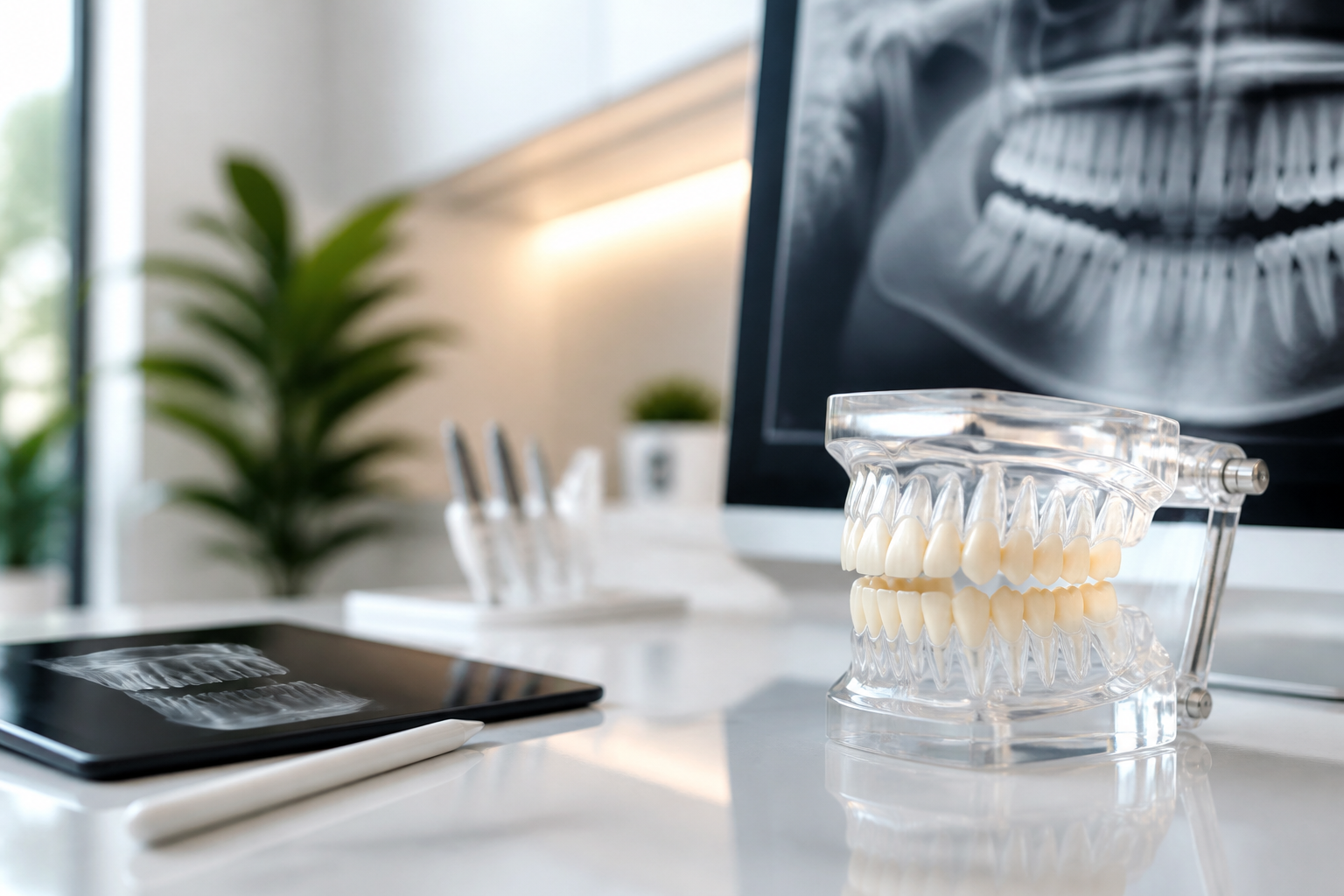
A comprehensive orthodontic evaluation involves clinical examination, digital photographs, and x-rays. Depending on your specific presentation, a CBCT scan (a three-dimensional image of the teeth and jaw) may also be taken. These records are not gathered to fill out a file. They are the actual diagnostic data the orthodontist uses to understand your tooth positions, bone structure, root angles, and jaw relationship before recommending anything.
From those records, the orthodontist can determine whether crowding and bite problems adults present with are suitable for clear aligner treatment, whether conventional or self-ligating braces are more appropriate, and whether any concerns, such as periodontal issues, should be addressed by a general dentist or periodontist first.
What to expect at your first visit at SmileHaus is a conversation, not a commitment. You leave with an understanding of what is happening clinically and what your options are. What you do with that information is entirely up to you.
Treatment Options for Adult Alignment and Bite Issues
Adult orthodontic treatment has expanded considerably. The days of metal braces being the only practical option are long past, and the clinical sophistication of current bracket and aligner systems means that complex tooth movement is achievable with both approaches.
For cases that require precise control of tooth position — particularly bite correction involving significant vertical or rotational movement — braces are generally the more efficient clinical choice and serve as the first-line recommendation for those presentations. SmileHaus uses the Pitts21 PRO braces system, a self-ligating bracket design that eliminates conventional elastic ties and allows teeth to move with lighter, more consistent forces. This approach tends to reduce friction in the system, which can support more comfortable movement and, in many cases, fewer in-office adjustment visits. Self-ligating brackets are particularly well suited to adults who have complex alignment patterns or who are managing treatment around busy professional schedules.
For adults who prefer a discreet, removable option, Spark™ Clear Aligners are the first-line choice for mild to moderate alignment cases where anatomy and treatment goals align with what clear aligners do well — a strong fit for patients whose presentation falls within that clinical range.
The right choice depends on your specific anatomy, your treatment goals, and your lifestyle. There is no universally superior option. That determination comes from your records and a direct conversation with the orthodontist.
Taking the Next Step
If your teeth have shifted, your dentist has flagged a bite concern, or you are experiencing jaw discomfort you cannot quite explain, an orthodontic evaluation is a reasonable and informative next step. It does not commit you to treatment. It gives you accurate information about what is happening structurally, and what your options are.
The team at SmileHaus Orthodontics at 1414 Fair Oaks Avenue, Unit 7 approaches adult evaluation as a clinical process, not a sales process. The goal is to help you understand your situation clearly so you can make a confident, informed decision.
Contact SmileHaus Orthodontics today to schedule your free consultation and find out exactly where things stand.