When Is the Right Age for a Child’s First Orthodontic Evaluation, and What Happens at That Appointment
You’ve heard it from your pediatric dentist. You’ve read conflicting timelines in parenting groups. Maybe a school nurse flagged something during a routine screening. And now you’re left wondering: when should a child see an orthodontist? The question feels simple enough, but the answers you’ve encountered probably haven’t been.
If you’re the parent of a child between the ages of six and ten, you’re not alone in feeling uncertain. This article walks through what orthodontists actually look for at an early evaluation, what the experience is like for your child, and why walking out without a treatment plan can be the best possible result.
What the American Association of Orthodontists Recommends, and Why
The American Association of Orthodontists recommends that children have their first orthodontic evaluation by age seven. That number surprises many parents, who assume orthodontic treatment is a middle school or high school concern.
The reasoning, however, is not about starting treatment early. It’s about timing information correctly. By age seven, most children have a mix of baby teeth and permanent teeth, and an orthodontist can assess how the jaw and bite are developing while there is still time to act if action is genuinely needed. The emphasis is on evaluation, not intervention.
At SmileHaus Orthodontics on Fair Oaks Avenue, this philosophy shapes every early consultation. The goal is not to put a child in treatment as soon as possible. It’s to understand where development is headed so that families can make informed decisions, at the right time, without pressure.
What an Orthodontist Looks for at a First Evaluation
A first orthodontic evaluation is not a procedure. No one is placing brackets or fitting appliances. The appointment is primarily observational and conversational, and most children find it far less intimidating than a standard dental cleaning.
Here is what the orthodontist is typically assessing:
Bite relationships. How the upper and lower teeth come together matters significantly. Crossbites, underbites, deep bites, and open bites are easier to address when the jaw is still growing. An orthodontist can identify these patterns well before they become fixed.
Jaw development. The width and symmetry of the upper and lower jaws affect everything from how permanent teeth will erupt to how a child breathes and chews. Early identification of a narrow palate, for example, can change the treatment path considerably.
Tooth eruption patterns. Teeth that are coming in at unusual angles, crowding each other, or failing to emerge on schedule can signal underlying issues worth monitoring. An orthodontist can often predict crowding before it is fully visible.
Habits affecting development. Prolonged thumb-sucking or tongue-thrusting can push teeth and jaw structures out of alignment. Identifying these habits early allows for simple guidance that may prevent more complex treatment later.
Space management. If baby teeth have been lost early due to decay or injury, there may be a need to hold space for incoming permanent teeth. This is one situation where early action can prevent a larger problem down the road.
For parents who have questions about how orthodontic treatment works, a first evaluation is also an ideal time to ask them in an unhurried setting.
”Watchful Waiting” Is a Real Treatment Plan
One of the most important things to understand about early orthodontic evaluations is that the most common outcome is observation, not treatment. Orthodontists call this “watchful waiting,” and it is a legitimate, thoughtful clinical decision.
Being told that your child does not need anything right now does not mean the visit was wasted. It means you now have a baseline. You know what is normal for your child’s development. You know what to monitor. And you have a relationship with a provider who will flag any changes at future check-ins.
This approach is central to how children’s orthodontics is practiced at SmileHaus. Children grow at different rates, and treatment that begins too early can sometimes require a second phase later, extending the overall process unnecessarily. The most efficient path is not always the earliest one.
Parents who come to SmileHaus’s Fair Oaks Avenue office after receiving conflicting timelines from other providers often find that a conservative second opinion gives them more confidence than a rushed treatment recommendation ever could.
When Early Treatment Actually Is Recommended
While watchful waiting is the most common outcome, there are specific situations where beginning treatment early, sometimes called Phase 1 treatment, makes genuine clinical sense. These are not cosmetic concerns. They are structural issues that respond better to intervention while the jaw is still growing.
Skeletal crossbites. When the upper jaw is narrower than the lower jaw, the back teeth may close on the wrong side. Palatal expanders, when used at the right developmental window, can address this with much less complexity than would be required after growth is complete.
Significant underbites. When the lower jaw protrudes in front of the upper jaw, the window for influencing jaw growth is finite. Early intervention can sometimes reduce or eliminate the need for surgery later.
Severely blocked or impacted teeth. If imaging shows that a permanent tooth is trapped and cannot erupt normally, early action can create the space it needs before surrounding teeth shift to close that gap.
Habits causing structural change. A child who has been thumb-sucking past age five or six may have already altered the shape of the upper arch. In these cases, a simple habit appliance can correct the pattern while the bone is still responsive.
In all of these scenarios, the recommendation for early treatment comes with a clear explanation of what is being addressed, why the timing matters, and what the expected outcome looks like. Families visiting the SmileHaus location at 1414 Fair Oaks Avenue can expect that same level of transparency at every stage.
What to Expect During Your Child’s First Appointment
Knowing what will happen helps both parent and child feel more comfortable walking through the door. Here is a straightforward picture of what a typical first evaluation looks like.
The welcome and intake. The team will collect some basic health history and give your child a chance to get familiar with the environment. Orthodontic offices that work regularly with young children tend to be thoughtful about the pace and tone of these first moments.
A clinical exam. The orthodontist will look at your child’s teeth, bite, and jaw. This usually involves asking your child to bite down in different positions and gently examining the teeth and gums. It is not uncomfortable.
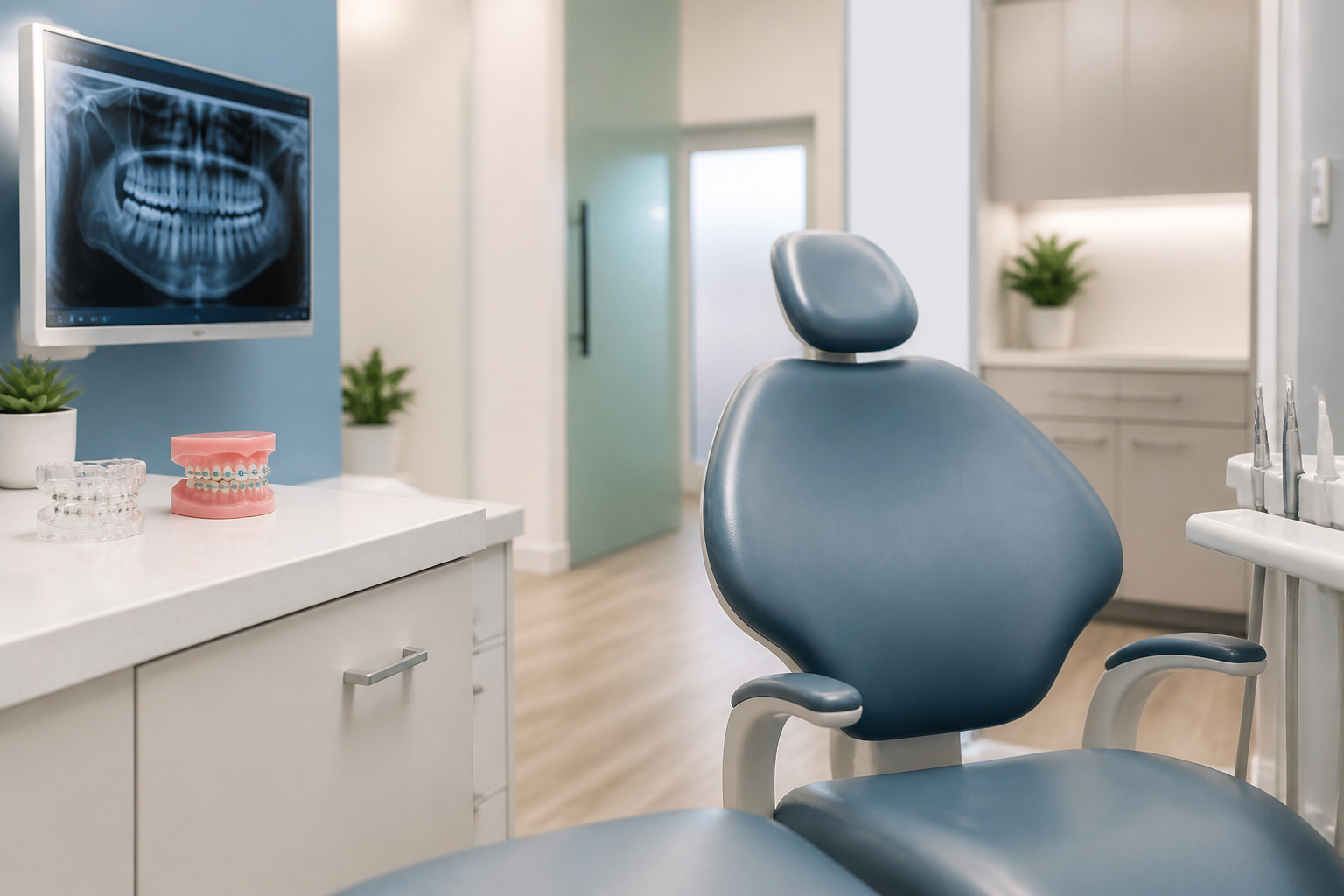
Imaging, if indicated. Depending on your child’s age and what the exam reveals, the orthodontist may take a panoramic X-ray to see teeth that have not yet erupted and assess root and jaw development. This is not always necessary at a first visit for younger children.
A conversation with you. At the end of the exam, the orthodontist will share their findings with you directly. If watchful waiting is recommended, they will explain what they are monitoring and when to return. If early treatment is appropriate, they will outline what that looks like, why, and what the alternatives are.
For a more detailed picture of what this looks like at SmileHaus specifically, the what to expect at your first visit page covers the process from arrival to follow-up.
Why the Right Orthodontist Matters More Than the Right Age
The single most important factor in a child’s orthodontic journey is not when treatment begins. It is whether the provider making that decision takes the time to understand your child’s specific development rather than applying a one-size-fits-all protocol.
At SmileHaus Orthodontics at 1414 Fair Oaks Avenue, Unit 7, the philosophy is built around respecting each child’s individual growth timeline. That means some children will be seen regularly for two or three years before any active treatment begins. It means parents are never made to feel that they missed a critical window if they arrived later than age seven. And it means recommendations for early treatment are made only when there is a clear, defensible clinical reason.
The conflicting advice you’ve received from different sources most likely reflects genuine variation in clinical philosophy across providers. A conservative, growth-respecting approach prioritizes the long view: treatment that is well-timed, appropriate in scope, and designed to minimize the total burden on your child over time.
Helping Your Child Start on the Right Path
There is no single “right age” that applies to every child. What matters is that an orthodontist who knows what to look for has had a chance to assess your child’s development before the window for certain types of intervention closes quietly.
If your child is between six and ten years old and you have not yet had an orthodontic evaluation, or if you received a recommendation that felt rushed or unclear, a second opinion is always reasonable. SmileHaus Orthodontics is committed to helping families feel informed and confident, not pressured.
Ready to get a clear picture of where your child’s development stands? Schedule your free consultation with SmileHaus Orthodontics today and visit our team at 1414 Fair Oaks Avenue, Unit 7. We will take the time to answer your questions honestly and help you move forward with confidence.