The Fear of Choosing the Wrong Orthodontist, What to Actually Look for (and What to Ignore)
Starting orthodontic treatment is a significant commitment, and if you are new to an area, vetting practices without a personal referral can feel genuinely overwhelming. Knowing how to choose an orthodontist is not just about finding someone with a clean waiting room and good Google reviews. It is about understanding which signals actually reflect clinical quality, which ones are marketing noise, and how to tell the difference before you sign a treatment plan. This guide walks through exactly that, drawing on the kind of transparent, patient-centered approach that SmileHaus Orthodontics at 1414 Fair Oaks Avenue, Unit 7 is built around.
Credentials That Actually Matter (and What the Titles Really Mean)
The word “orthodontist” is not interchangeable with “dentist who does braces.” A licensed orthodontist has completed dental school and then spent two to three additional years in an accredited orthodontic residency program focused exclusively on moving teeth and guiding jaw development. That specialty training is what allows an orthodontist to manage complex bite corrections, growth modification in children, and adult cases that involve more than cosmetic alignment.
When you are researching a practice, confirm that the provider is a specialist, not a general dentist offering orthodontic services as an add-on. This distinction matters most in cases involving jaw issues, significant crowding, or treatment for growing children, where specialty training shapes the entire treatment plan.
Professional memberships such as the American Association of Orthodontists (AAO) and state-level orthodontic societies are worth noting as well, because they require active specialty status and keep providers connected to evolving clinical standards. Dr. Karla Thompson at SmileHaus Orthodontics holds these memberships, which you can verify directly on the Dr. Karla Thompson profile page.
What to Ignore: Marketing Claims That Are Noise
Before walking into any consultation, it helps to recognize the phrases that sound reassuring but carry no verifiable weight.
“We use the latest technology.” Every practice says this. Ask instead what specific systems they use and why those systems benefit your case specifically. A practice should be able to explain the clinical rationale, not just name a piece of equipment.
Unattributed recognition claims. Phrases like “top-rated in the area” carry no verifiable weight unless they are tied to a named, verifiable third-party source — such as a specific publication or ranking with a methodology you can look up. If no source is named, treat the claim as filler. For reference, Dr. Thompson was named to the Los Angeles Top Orthodontists 2025 list, a recognition published by a named third party that you can look up independently.
Before-and-after photos without context. Photos are useful, but only when accompanied by information about treatment duration, case complexity, and what type of appliance was used. A collection of easy cases presented without context tells you nothing about how the practice handles difficult ones.
Price teaser advertising. If an advertised price does not clearly state what is and is not included (records, retainers, follow-up visits), ask for a written breakdown before comparing it to another practice’s quote. Apples-to-apples pricing comparisons require full disclosure of what each number covers.
The goal is not to be cynical about every practice you research. It is to filter out the noise so you can focus on what is genuinely informative.
The Continuity Question: Why Seeing the Same Provider Matters
One of the most underappreciated factors in orthodontic care is provider continuity, meaning whether you will see the same orthodontist at every appointment or rotate through different doctors and residents.
This matters clinically. Orthodontic treatment is a long-term process in which each adjustment builds on what happened at the previous visit. A provider who has personally examined your teeth at every appointment has a detailed picture of how your case is progressing. A provider seeing you for the first time at adjustment number four does not have that continuity, and small details can be missed.
At a first consultation, it is reasonable to ask directly: “Will I see you at every visit, or will I sometimes be seen by an associate or resident?” The answer should be clear and honest. A practice that rotates high-volume patients through multiple providers is running a different model than one built around a single specialist who tracks every case from start to finish.
SmileHaus Orthodontics at 1414 Fair Oaks Avenue, Unit 7 is structured around Dr. Thompson seeing patients personally throughout treatment, which is something you can ask about directly when you come in for your first appointment.
Questions to Ask at a First Consultation
A first consultation is not just the practice evaluating you. You are evaluating them. Here is a short list of questions that reveal more than most:
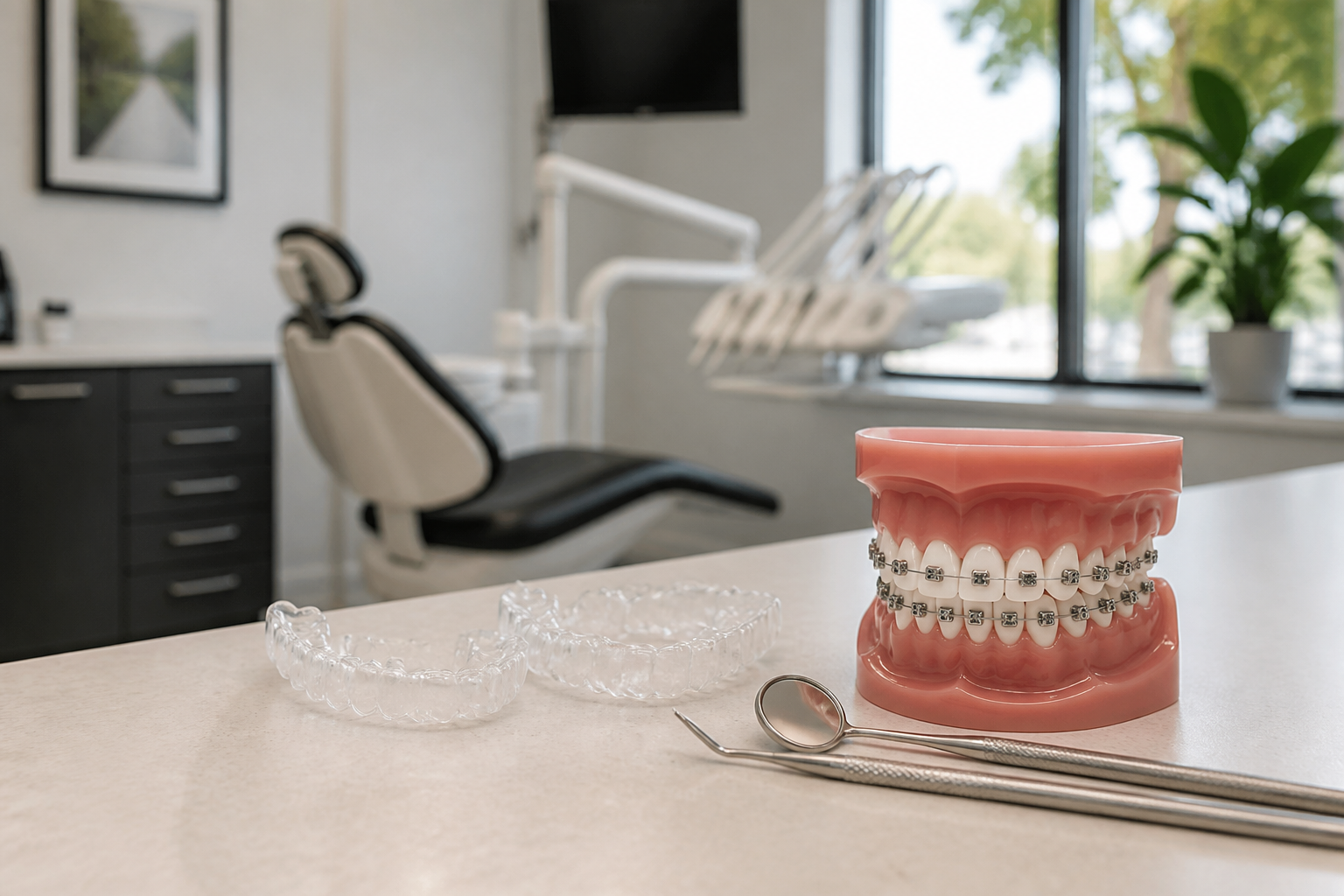
“What treatment options are available for my specific case, and why are you recommending this one?” A straightforward answer that explains the clinical reasoning, not just the product features, is a good sign. For example, fixed braces using the Pitts21 PRO system are often the first-line recommendation for more complex cases, while Spark™ Clear Aligners may be well suited for adults and mature teens with mild to moderate alignment needs — your orthodontist should explain which approach fits your case and why, including compliance factors, case complexity, and retention planning.
“How long has the practice been at this location, and how long have your clinical staff been with you?” Staff retention is a quiet indicator of how a practice is run internally.
“What happens if I have a problem between appointments?” Find out the process for broken brackets, aligner fit issues, or unexpected discomfort. A clear, accessible after-hours protocol is a sign of an organized practice.
“Can you walk me through the full cost, including what is not covered?” Transparency about financing is a trust signal. A practice that is uncomfortable itemizing costs is one to approach cautiously. SmileHaus offers clear information about orthodontic payment plans and insurance for braces so patients can plan ahead without surprises.
“What does retention look like after treatment ends?” Results are maintained with retainers, and retention is a lifelong commitment — a practice that treats the retainer phase as an afterthought may have a higher relapse rate among former patients.
What a No-Pressure Practice Should Actually Feel Like
There is a meaningful difference between a practice that informs you and one that rushes you toward a decision. A transparent, patient-centered consultation will give you time to ask questions, will not manufacture urgency around a decision you need to make carefully, and will provide written documentation of the proposed treatment and cost before you leave.
Watch for these specific signals during a visit to any practice:
- Staff who explain what they are doing before they do it
- A provider who acknowledges trade-offs rather than presenting only the upsides of a recommended approach
- No pressure to start treatment or sign paperwork at the first visit
- A clear explanation of what your first visit includes before you arrive
You can read more about what to expect at your first orthodontist appointment at SmileHaus Orthodontics at 1414 Fair Oaks Avenue, Unit 7 before you book, so there are no surprises when you arrive.
A Note for Parents Vetting Orthodontists for Children
If you are researching orthodontists for a child rather than yourself, the same principles apply, but a few additional factors become relevant.
The American Association of Orthodontists recommends that children have an initial orthodontic evaluation no later than age seven. This is not because most seven-year-olds need treatment. It is because certain jaw and bite issues are significantly easier to address during active growth than after it. A qualified orthodontist will tell you honestly if early treatment is warranted, or if watchful waiting is the right approach, rather than recommending intervention prematurely.
Ask specifically whether the practice sees a meaningful volume of children’s orthodontics cases. A practice with genuine experience in early treatment will have a clear philosophy about when to intervene and when to monitor, and they should be able to articulate it in plain terms.
Choosing with Confidence
Knowing how to choose an orthodontist comes down to a few clear priorities: verify specialty credentials, ask about provider continuity, expect transparent pricing, and pay attention to how a practice communicates during your first interaction. The credentials that signal genuine quality are verifiable. The marketing language that does not signal much is largely recognizable once you know what to look for.
SmileHaus Orthodontics at 1414 Fair Oaks Avenue, Unit 7 is built around these principles. Dr. Thompson is a licensed orthodontic specialist with active AAO membership, a consistent record of seeing patients personally throughout treatment, and a practice philosophy centered on clear communication over high-pressure sales.
If you are ready to ask the right questions and find an orthodontist you can trust for the long haul, schedule your free consultation with SmileHaus Orthodontics today.