Playing Sports with Braces: What Teen Athletes Actually Need to Know
If you’re a teen athlete weighing orthodontic treatment against your sports season, or a parent trying to figure out how braces fit into an already packed schedule, you’ve probably asked the same question in a hundred different ways: will this slow my kid down? The good news is that braces for teen athletes are far more manageable than most people expect. The even better news is that modern orthodontic treatment has changed significantly, and the old image of a mouthful of metal keeping a player on the sidelines simply does not reflect how things work today.
This guide covers what you actually need to know, from protective gear to broken brackets to why the right treatment system can mean fewer trips to the orthodontist mid-season.
The Real Risks (and How to Handle Them)
Let’s be honest about what can happen, because vague reassurances don’t help anyone.
Playing contact sports with braces does carry a small added risk. A hit to the mouth can cause a bracket to scrape the inside of the lip or cheek. In a collision sport, the impact of the lower teeth against the upper can potentially dislodge a bracket or bend a wire. These things happen. They are also very manageable, and they should not stop a motivated athlete from pursuing treatment.
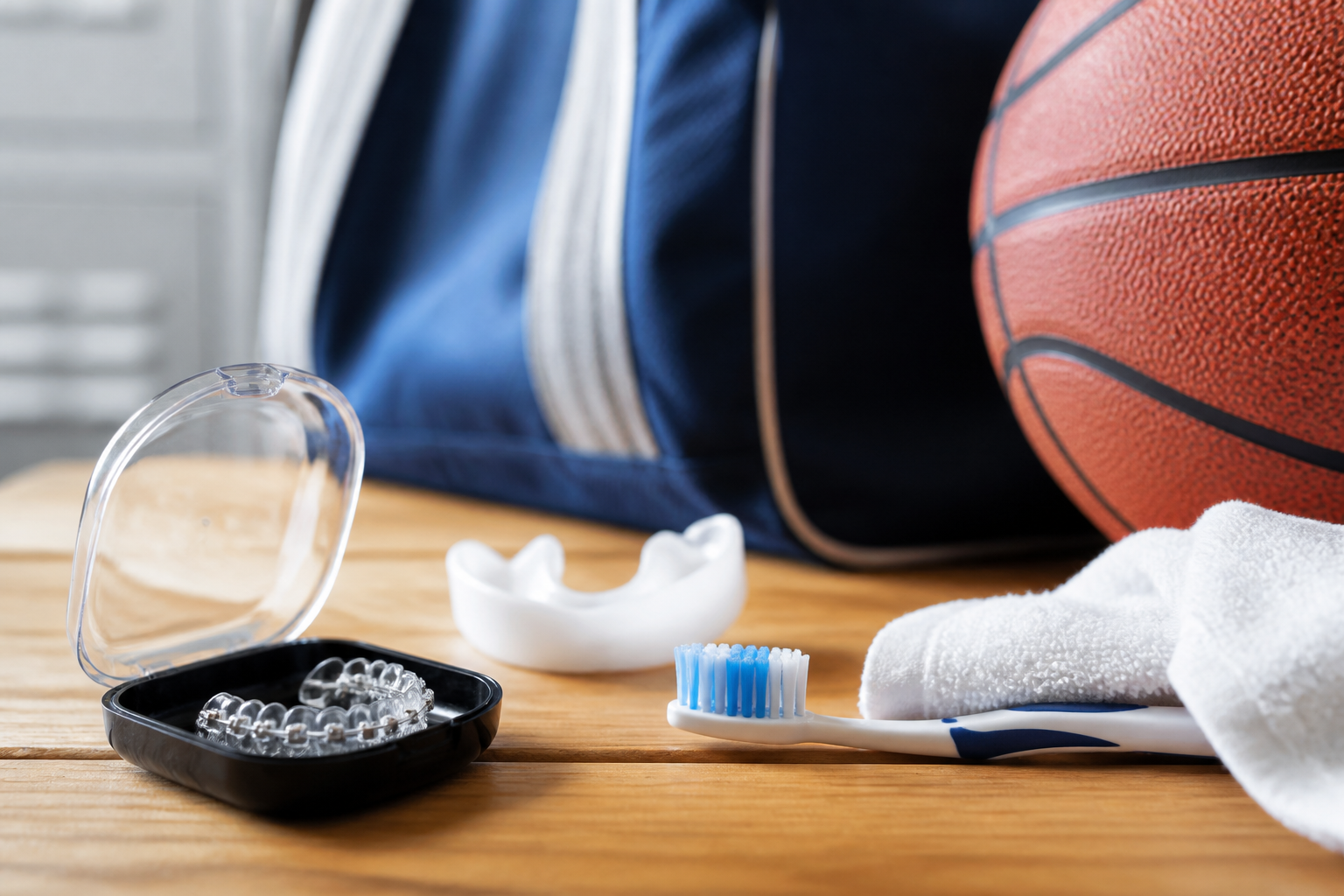
The practical answer to most of these risks is one piece of equipment: a properly fitted orthodontic mouthguard. This is not the same as a standard boil-and-bite guard. A standard mouthguard cannot accommodate braces properly, can actually damage brackets, and typically cannot be worn comfortably over hardware. An orthodontic mouthguard is designed with extra depth and flexibility to sit over the brackets without creating pressure points. It cushions the lips and cheeks against the metal and absorbs impact before it reaches the teeth and brackets.
Any athlete in a contact or collision sport, including football, basketball, soccer, lacrosse, hockey, wrestling, and martial arts, should be wearing one at every practice and every game, without exception. For non-contact sports like swimming, cross-country, or track, the practical risk is minimal and a mouthguard is usually not required.
Your athlete’s orthodontist should be the first person you ask about which guard to use. The team at SmileHaus Orthodontics, located at 1414 Fair Oaks Avenue, Unit 7, can help you identify the right option based on your sport and bracket type.
What to Do When a Bracket Breaks During a Game
It will probably happen at some point, and the middle of a game is the worst time to realize you do not know what to do.
Here is the short version: stay calm, finish the game if you can, and call the orthodontist the next business day.
A broken bracket is not a dental emergency in the way that a knocked-out tooth is. It is an inconvenience and it should be addressed, but unless there is sharp wire poking into soft tissue, it is not something that requires an emergency room visit. If a wire is poking uncomfortably, orthodontic wax (which every athlete with braces should keep in their bag) can be pressed over the sharp end as a temporary fix. If a bracket comes completely loose but is still threaded on the wire, leave it in place and avoid disturbing it.
What you should not do is wait several weeks before calling. A loose bracket is not doing its job, and leaving it too long can add time to overall treatment. Call SmileHaus Orthodontics at 1414 Fair Oaks Avenue, Unit 7, within a day or two so the team can assess whether the repair needs to happen quickly or can be folded into an already-scheduled appointment.
Keeping a small kit in your sports bag makes handling these situations much easier. That kit should include orthodontic wax, a small mirror, and your orthodontist’s phone number.
Why Fewer Appointments Matters for Busy Athletes
Here is something parents managing a teenager’s schedule will genuinely appreciate: not all braces require the same number of office visits.
Traditional braces use elastic ties, sometimes called rubber bands or ligatures, to hold the wire to each bracket. These ties create friction, they wear out, and they need to be replaced at regular adjustment appointments, typically every four to six weeks throughout treatment.
Self-ligating braces work differently. Instead of elastic ties, a small built-in clip or door holds the wire in place. This reduces friction, allows the wire to move more freely, and typically means fewer adjustment appointments are needed over the course of treatment.
SmileHaus Orthodontics uses the Pitts21 PRO braces system, a self-ligating bracket that is designed to work with the natural biology of tooth movement. Because the system requires less mechanical force and generates less friction, patients typically need fewer check-in visits than with traditional braces. For a family already coordinating school, practice, travel games, and everything else, fewer orthodontist appointments during the season is a real and meaningful benefit.
If you want to understand more about orthodontics for teens and what a treatment timeline might realistically look like alongside a sport, that is exactly the kind of conversation worth having at a consultation.
Sports That Require Extra Planning
Most sports are compatible with braces from day one of treatment. Some require a little more thought.
Contact and collision sports (football, hockey, wrestling, basketball, lacrosse, rugby) require an orthodontic mouthguard and should be discussed with your orthodontist before the season begins. The mouthguard question is not optional in these sports.
Water sports present a different consideration. Swimmers generally do not need a mouthguard. The main issue is that extended pool time does not damage braces, but chlorine can weaken the elastic ties on traditional brackets over time. With self-ligating brackets like the Pitts21 PRO system, that concern is less relevant since the wire is held by a mechanical clip rather than elastics.
Combat sports and martial arts carry a higher risk of facial contact. Some athletes in these disciplines choose to pause sparring during treatment or work with their coaches to modify practice while their orthodontic treatment progresses. This is a personal decision that depends on the individual athlete, their level of competition, and the specific art.
Gymnastics, dance, and cheer do not typically require any modification for braces, though athletes should carry wax for any comfort issues with brackets rubbing during extended performances.
The key point is that no sport automatically means no braces. The conversation with your orthodontist is about how to do both, not whether to choose one or the other.
Managing the Schedule and the Cost
One of the quieter worries for single parents, or any parent working with a tight schedule and a real budget, is how orthodontic appointments fit into a week that is already stretched thin. The fewer-visits advantage of self-ligating systems is part of the answer. Another part is finding a practice that understands your actual situation.
The team at SmileHaus Orthodontics, at 1414 Fair Oaks Avenue, Unit 7, approaches each patient as an individual with a real life outside the office. That means flexible appointment scheduling and transparent conversations about cost and payment options. If you want to understand what treatment might run financially, orthodontic payment plans and insurance options are available to review before you commit to anything.
It is worth knowing that Starting treatment at the right developmental stage can support more straightforward tooth movement, which may have scheduling benefits worth discussing with your orthodontist.
Treatment Does Not Mean the Bench
This is the message that matters most: a diagnosis that calls for braces does not mean your athlete sits out.
Athletes with braces compete at every level of every sport, including collegiate athletics and professional development programs. The braces are there in the background, doing their job, while the athlete does theirs. The adjustment period at the start of treatment, typically the first one to two weeks after brackets are placed, involves some soreness and getting used to the hardware. After that, most teen athletes report that braces become background noise. They stop noticing them.
The practical precautions are real but manageable. A mouthguard, a small emergency kit, and a reliable orthodontist who understands athlete schedules cover most of what you need.
If you have been putting off orthodontic treatment because of sports season, or because you are not sure how to fit appointments into an already full calendar, the best next step is a direct conversation with someone who can look at the specific situation and give you an honest picture of what treatment looks like for your athlete.
Take the First Step
Whether you are a teen athlete with questions about how braces will affect your game, or a parent trying to figure out logistics and costs, SmileHaus Orthodontics is ready to give you clear, practical answers.
Contact SmileHaus Orthodontics today to schedule a consultation at 1414 Fair Oaks Avenue, Unit 7. Bring your sports schedule, your questions, and your real concerns. The goal is to get your athlete the smile they deserve without getting in the way of the sport they love.